

HELPING YOUR CHILD’S BRAIN
This course will enable you to see how much neurodevelopmental growth your child is capable of – and provide you with the tools you need to obtain that growth – turning confusion and anxiety into clarity and hope.
Welcome
Welcome to the Family Hope Center
We are grateful to be part of your family’s journey. We believe that teaching you about the brain and how to implement brain-based therapies with your children at home is the most effective and enduring way to help them reach their potential. The Parent Training Course is the first step on that path: it contains foundational knowledge that guides you through the completion of a neurodevelopmental assessment of your child and the development of an individualized treatment plan based on the results.
We believe in empowering parents to heal their children with brain-related disabilities, and we know that healing comes from giving the brain what it needs to heal itself – proper nutrition and proper neuro-stimulation.
We have worked shoulder-to-shoulder with thousands of parents and their children since 1981. We have witnessed 40 years of parents healing their children with devotion, love, and purpose.
We started our own family during the early part of this 40-year journey. Two of our children faced complex neurodevelopmental difficulties.
Our first daughter began life as a healthy baby. She progressed well until the age of three months when she suffered an injury where we witnessed a serious neurological unraveling. She developed strabismus, lost function on her right side, and over the years, struggled with reading and writing.
We applied the same approaches to our daughter that we use for the children we treat at the Family Hope Center. It took many years of daily, diligent effort to completely develop our daughter’s neurological function, and we are proud to say that she now works at a pediatric hospital as a Doctor of Occupational Therapy.
We adopted our youngest daughter when she was five months old. She came to us with significant cortical and limbic impairments which manifested in many heartbreaking ways, including intellectual and emotional challenges.
We took steps to heal her as we did with her older sister. She has since graduated from college where she was a champion athlete, became a Lieutenant in the local Fire Department, and has been certified as an EMT. We are proud to say she is a happy and successful adult who enjoys helping others.
These results didn’t happen overnight. It took years of learning, dedication, patience, love, and continued faith in the brain’s ability to heal. As parents, we have the peace of knowing we were able to shepherd our daughters through their injuries and give them the best possible future. Our daughters know that their hard work and ours have paid off.
The result of this journey is that we have two perspectives to share with you—one as professionals and the other as parents. We were in a similar situation to you and recognize what you have been going through and how resilient you can be.
We are committed to you and want to share our knowledge, personal experiences, and neurological strategies to help you become empowered and productive neuro-parents.
We look forward to joining with you on your journey to heal your child.

Lesson 1
The Family Hope Center Approach and Methodology
An introduction to who we are, the principles that guide our approach, and our core mission: to partner with parents like you from around the world by sharing the practical science of neuroplasticity and brain development, and support you in designing and implementing individualized, home-based treatment plans that will improve your child’s neurological and functional abilities.
Please watch this brief introduction to Lesson 1
In this lesson, we introduce the Family Hope Center: our principles, philosophy, and core values. In doing so, we also discuss what makes our approach unique.
Our approach works by:
- Teaching you the fundamentals of how the brain works
- Evaluating your child using a unique neurodevelopmental assessment
- Supporting you in designing and implementing a home-based plan
- Guiding you in tracking the results and measuring your child’s progress
Parents as Partners
We believe that supporting families to implement therapies at home is the most effective and enduring way to help children. Our program helps you breathe easier by providing you with knowledge to make the best decisions for your child. As a parent, you have great insight into your child and their capabilities. By combining that knowledge with a basic understanding of neurological and physiological function, you will learn how to work more effectively with your child: smarter, not harder.
The Family Hope Center Team
Over the past four decades, our team has studied the neurological origins of disabilities in children and integrated knowledge from global experts in complementary disciplines.
Our goal has always been the same: to aggregate all the knowledge necessary for parents of children with special needs to know. To that end, our team includes specialists from different fields including medicine, various forms of therapy, child development, and physiological health.
Our singular passion continues to be learning the most effective ways to heal the brain, regardless of severity, and transferring that knowledge to the most important group of people: the parents of children with special needs.
Bottom Up and Inside Out
Apart from our focus on partnering with families, these two terms – “bottom up” and “inside out” – capture the central philosophies that make our approach to healing the brain unique.
Inside Out (e.g., physiological and neurochemical):
To illustrate this idea, we discuss some of the most common labels and terms used to describe disabilities and disorders today. We discuss the limitations of symptom-based diagnostic criteria and introduce a different approach which measures the function of various neurological and physiological systems instead. Finally, we describe how all of these have a common root cause: dysfunction or injury in the brain.
Bottom Up (e.g., brain structure and development):
Perhaps the most important concept of all, this idea links brain development and structure with choosing the most effective and appropriate therapies for the present moment. We discuss the virtues and drawbacks of different therapeutic programs and interventions and describe how – based on the rules of the way the brain works – some succeed, and others are doomed to fail.
Optimizing Your Learning
In this section, we discuss different learning styles and why it is so important not to learn in just one way: some of us are big picture people and some focus on details; some learn best through illustrations, stories, or metaphors, and some just want the facts. We discuss the immense value of how different parts of the brain interact with, process, and analyze information, and how – on behalf of your child and despite the intense issue at hand – you can maximize your learning in this course.
Myths, Beliefs, and Inattentional Blindness
In this section, we discuss how preconceived ideas are deep-seated, and therefore embedded in our subconscious. We look at how we think of ourselves, our parenting skills, our thoughts about healing the brain, and how we view the condition of children who are hurt.
We discuss how our current thinking shapes what we do, and how some of these ideas are useful while others are self-limiting or even false, such as low expectations for our children, correlating intelligence with brain injury, or our own feelings of powerlessness.
Finally, we discuss how we can embrace new ideas about parenting and healing by being intentional about where we put our focus: away from seeing our children as collections of symptoms, behaviors, or problems, and towards understanding them more deeply and holistically by looking at their brains and developmental abilities.
The Reality of Brain Plasticity
The brain is amazing, wonderful, and incredibly complex, yet it can be understood through some relatively simple principles.
The most important of these principles is that the brain grows, changes, and heals itself throughout our lives. The scientific term for this process is neuroplasticity. By learning how the brain does this and why, anyone can learn how to create the optimal circumstances, stimulation, and environment for new brain development to occur.
The brain grows by use. As babies, we learn by being provided with opportunities, and it is the same for everyone else. When the right stimuli are applied with enough frequency, intensity, and duration, this creates the optimal environment for the brain to grow and heal itself, and functions of the developing brain areas or networks will naturally improve at the same time.
This fact has important implications for your child: as a parent, you are optimally situated to provide the most frequent learning opportunities for your child. You can get into the ideal zone between where your child is today and where their next step in development is.
This is great news: you can learn to use these strategies to truly help your child. You are the daily presence, the lifelong relationship, and the constant in your child’s life, able to provide their brain stimuli with enough frequency, intensity, and duration to help them grow and develop.
Putting Parents First
In this section, we expand further on the core principle of the Family Hope Center – informing your discretion by education – and explain why this is central to healing the family and the children. This means putting parents at the center of the therapeutic process and concentrating first and foremost on teaching parents what they need to know to help their child.
We also address the unfortunate reality in which many parents, intentionally or unintentionally, view themselves as inferior and less than qualified to participate in planning, goal setting, and the treatment process. We address this subject head on – with 40 years of clinical experience placing the parent at the helm of healing and hope.
In addition to the unrivaled amount of time and care parents will give to help their children, we discuss how children view their parents as superheroes, and implicitly trust their parents to help them. This collaboration and love within the family is the beginning, and critical foundation, of healing.
How Are Our Children Defined?
In searching to understand their child’s challenges and how to help them, parents are introduced to lots of new, sometimes complex information. The diagnostic process used today often encourages parents to view and describe their child as a collection of symptoms, behaviors, disabilities, diseases, disorders, or syndromes. The reality is that your child is none of these.
In this section, we discuss how children should not be perceived as or defined by their labels, and how limited many traditional classifications can be in accurately describing our children or in helping us understand exactly how to help them. We then reflect on who our children really are, and engage in an interactive, eye-opening exercise around how we have been trained to see our children. This exercise allows parents (perhaps for the first time) to see their children through the lens of brain plasticity and variation in functional ability, allowing for a new, better way of conceptualizing challenges and how to support children’s development.
Hope
As you can tell from our name, hope is important to us. The last critical concept we address in this section is hope, and why we view it as an essential part of the healing process. The unfortunate fact is that in encounters with the systems designed to diagnose or help their children, many parents are given bleak prognoses, told not to expect too much, and therefore struggle to stay hopeful.
Noam Chomsky writes, “If you assume there is no hope, you guarantee there is no hope.” What some professionals and experts often do – even though they may be well-intentioned – is take that possibility away from parents.
Our goal is to help you understand the great power of hope. Paired with the reality of brain plasticity, you can imagine new possibilities for your family and child. Brian Collins put it perfectly when he said, “Hope is giving yourself permission to change the future.” In any journey, you must take the first step before you see what will happen after you do.
Key points from Lesson 1 and getting ready for Lesson 2
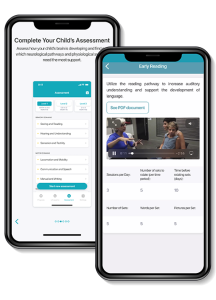
Did you know we’ve developed an app to support your child’s development?
The Family Hope Center App is designed to help parents understand and support their child’s unique neurodevelopmental journey. Your companion for at-home neurodevelopmental support.
Lesson 2
How Brain Injury Happens
There are many different (and sometimes quite complex) ways a good brain can get hurt. In this lesson we outline the basics of how the brain works and discuss the different ways brain function can be improved or injured. We also discuss how understanding the effects of an injury is hard if we only pay attention to its symptoms. We discuss how brain injuries should be defined and measured, and how assessing a person’s abilities (rather than disabilities) using a neurodevelopmental framework leads to a far greater understanding of them and how best to support them. We also address seizures: what they tell us about the brain, common misconceptions, and proven strategies to eliminate them. Finally, we describe how understanding the brain and basic neurology allows you to do two important things: to pinpoint the areas or systems in the brain that need support, and to develop a comprehensive and individualized strategy to directly stimulate the brain and improve its function.
Please watch this brief introduction to Lesson 1
In this section we go through the many ways a healthy brain can become hurt or injured through adverse circumstances or toxins in the environment. The brain can sustain injury either before, during, or after birth. Some of the most common ways include:
- Gestational conditions
- Birth-related complications
- Traumatic brain injury (TBI)
- Environmental toxins
- Genetics
- Viruses and bacteria
- Stroke
We also discuss how brain injuries are typically detected:
- Function
- Blood biochemistry
- CAT Scans/MRIs
- Surgery
We discuss in detail how injury and impairment can be observed through functional ability, including challenges with:
- Vision
- Reading and/or writing
- Attention, focus, and concentration
- Hearing
- Motor coordination
- Sensation
- Expressive (conveying information) and receptive (comprehending information) language
- Behavior
- Emotional regulation
- Seizures
Finally, we introduce the importance of cranial sacral function, outlining the brilliant work of Sutherland and Frymann. We discuss how this system works, relates to brain health, and how it is a key component of any neurotherapeutic plan.
Course Quiz
You’ve now taken an important first step in understanding how brain injury happens and how healing can begin. But true progress requires a clear plan, consistent guidance, and the right tools — all of which are provided in the full Parent Training Course.
In the complete program, you will learn:
- How to identify your child’s specific neurological needs
- Step-by-step strategies to stimulate development safely at home
- How to measure progress and adjust your approach
- Practical tools used successfully by families worldwide
- How to become the confident leader of your child’s healing journey
If you are ready to move from information to action, select your choice below.